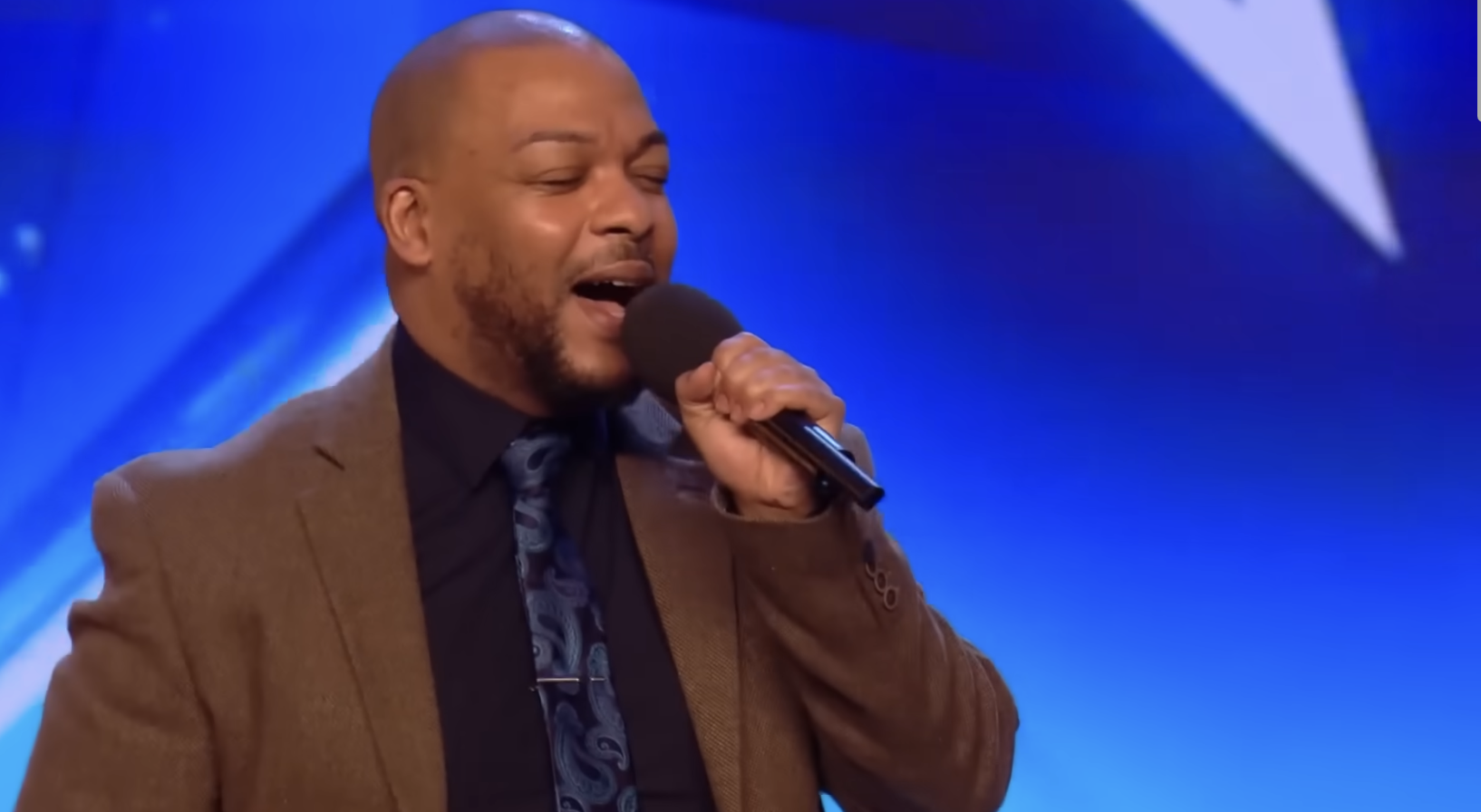
 That’s what gave the audition its emotional weight from the very beginning. This wasn’t just someone singing well on a big stage. It felt like a man stepping back into a part of himself he had almost lost. After years away from music and after battling anxiety and depression, the moment already carried something deeper before the first lyric even landed. You could feel that this performance meant more than just four yeses.
Then he started singing “A Change Is Gonna Come” — and the room changed with him. His voice didn’t sound polished in a cold, perfect way. It sounded lived-in. Honest. Heavy in the best possible way. There was pain in it, but also strength. Every line felt like it came from somewhere real, and that’s exactly why it hit so hard. It wasn’t just technically strong — it felt personal.
As the performance built, so did the reaction in the room. The judges weren’t just impressed — they looked emotionally pulled into it. The audience felt it too. By the final moments, the atmosphere had completely shifted from curiosity to full-blown respect. It had the kind of energy that only happens when people realize they’re not just watching a performance… they’re witnessing a comeback.
And then came the moment that locked it in forever. All four judges rose to their feet, and Alesha Dixon hit the Golden Buzzer, sending him straight through in a shower of gold. It wasn’t just a reward for a great vocal. It felt like recognition for everything it took to stand there, open his mouth, and believe in himself again.
Lifford Shillingford didn’t walk onto the Britain’s Got Talent stage like a man chasing attention. He walked in carrying history. At 42, he wasn’t some unknown dreamer trying to get noticed for the first time — he was a voice many people had already heard before, even if they didn’t realize it right away. Years earlier, he had tasted success, but what made this moment powerful wasn’t fame. It was the fact that he was standing there at all.