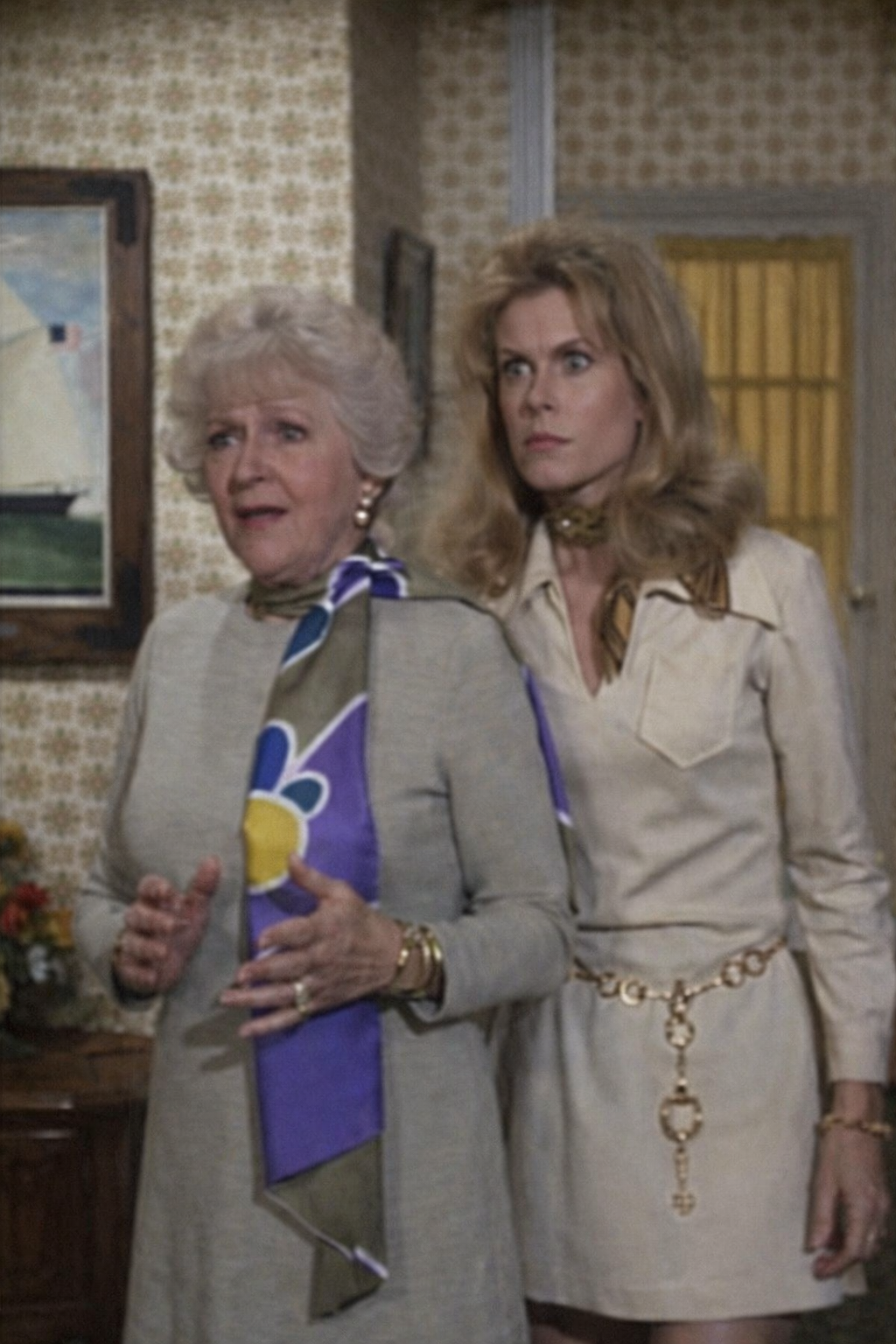
In the age of digital sleuthing, a series of production stills from the 1960s sitcom Bewitched has set the internet on fire. From “impossible” objects on the bookshelves to mysterious figures in dark doorways, these images of Elizabeth Montgomery have sparked a wave of “time-traveler” theories.
But as these photos circulate with warnings that they were “banned from archives,” a deeper look reveals a fascinating story about the “magic” of early television production.
1. The “Impossible” Object on the Floor
One of the most debated images features a sleek, white hardshell case resting on the floor near the actress. To a modern eye, it looks exactly like a high-end laptop case or a 21st-century medical kit. However, historians have a much more grounded explanation: the Vanity Train Case. In the late 60s, these hardshell plastic cases were the height of fashion, used by hair and makeup departments to keep Elizabeth Montgomery looking perfect between takes.
2. The Secret in the Shadows
Another viral claim points to the dark doorways and glass cabinets of the Stephens’ home. Viewers claim to see the glow of smartphones or “non-human” reflections. The truth? Studio Lighting “Blooms.” Because Bewitched used high-intensity lights to hide the wires used for special effects, any metallic surface—like a kettle or a trophy—would create a bright, rectangular reflection that mimics a digital screen.
3. The “Claw” and Forced Perspective
You may have noticed the actress’s hands looking strangely distorted in some stills. This isn’t a paranormal glitch; it’s a classic optical illusion. By standing in front of dark kitchen utensils or metallic toasters, her hands would blend with the background shadows, creating “monstrous” silhouettes that only appear when the film is frozen in a single frame.
Why Do We See These “Secrets”?
The human brain is hardwired for pareidolia—the tendency to see familiar patterns (like modern tech) in random shapes. Because the set design of Bewitched was so forward-thinking and “Space Age,” many items from 1968 naturally resemble the minimalist technology we use in 2026.
The Final Verdict
There is no “time-traveling” secret buried by the network. These photos are a testament to a production team that was decades ahead of its time. The real magic wasn’t hidden on a bookshelf; it was the incredible talent that made a 1960s living room feel like a world where anything was possible.