PART 2: A DYING WOMAN ASKED A NURSING-HOME COOK TO MARRY HER — SHE SAID IT WAS HER “LAST WISH,” BUT THE BAG SHE NEVER LET ANYONE TOUCH HELD SOMETHING FAR MORE DANGEROUS THAN A ROMANCE.
I’m Tobias, 29, and for three years I cooked meals at Brookhaven Senior Residence. Most residents barely noticed me. Eleanor noticed everything.
She was 79, a retired court reporter, sharp enough to catch every lie the facility director told at the monthly resident meetings — and she told me she caught plenty.
She carried a locked metal box everywhere, not a soft bag, and she guarded it like it held her own heartbeat.
“Is that important?” I asked once.
“It’s the only thing keeping certain people honest,” she said, and wouldn’t say more.
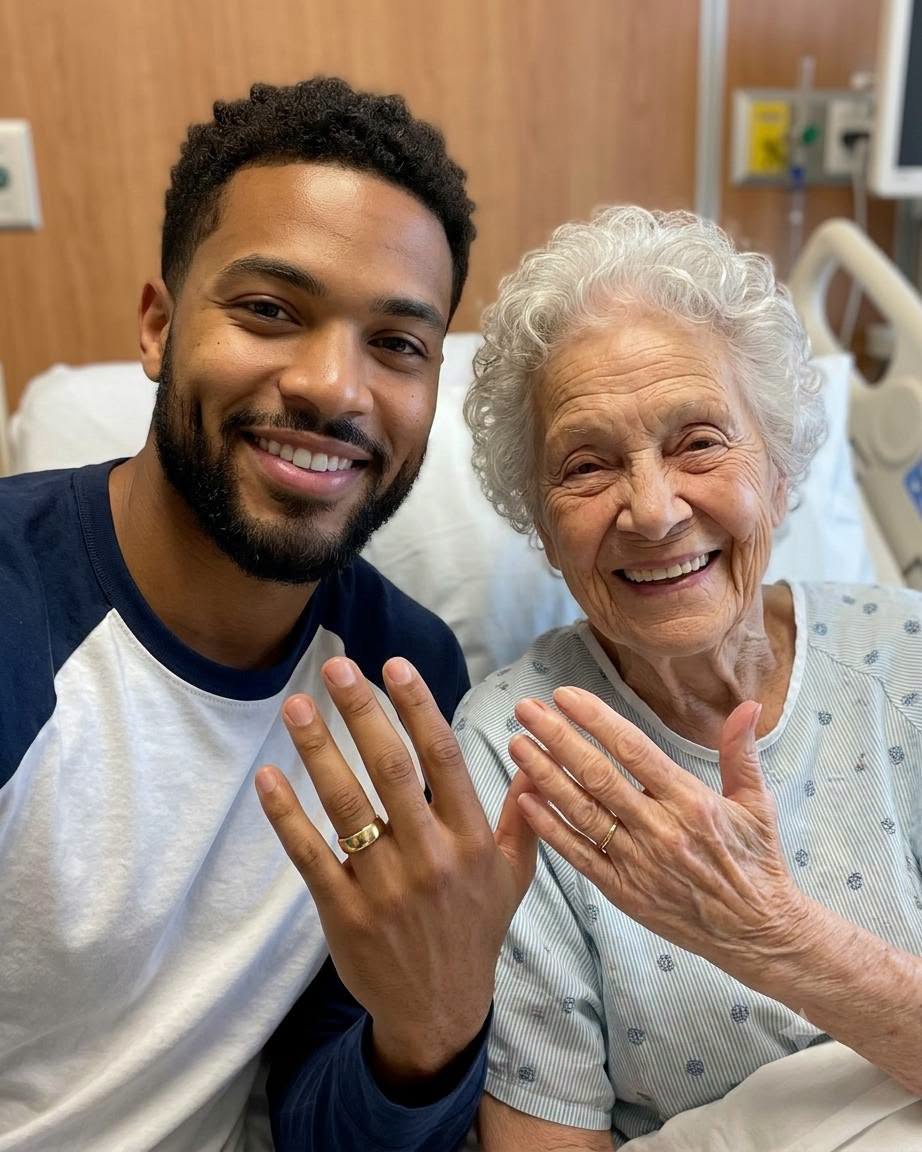
Three weeks before she died, she gripped my hand in her hospital bed and said, “I need you to marry me, Tobias. Not for love. For a reason I can’t explain yet. Please trust me.”
I said yes.
Four days later, she was gone — and her lawyer handed me that locked box with a warning: “Read what’s inside before you tell anyone she’s dead.”
Continued in the c0mments 
I sat in my car in the parking lot with the metal box on my lap for twenty minutes before I found the courage to open it.
Eleanor’s lawyer, a quiet man named Mr. Ferris, had told me almost nothing except that the box was never to leave my hands and that I should not mention her death to anyone at Brookhaven until I’d read what was inside. I trusted her enough to trust that.
Inside was not jewelry, not cash, not a long-lost family secret. It was a court reporter’s shorthand notebook — three of them, actually, filled with Eleanor’s own transcription of conversations she’d secretly recorded during resident council meetings over the past two years. Beneath the notebooks were bank statements, a spreadsheet in her tight handwriting, and a flash drive labeled “Copies — do not lose.”
Eleanor had spent thirty-five years as a court reporter before retiring. She knew exactly how to build a record that would hold up.
The spreadsheet tracked missing funds — resident trust accounts, money families deposited for incidentals, outings, hair appointments — funneled instead into a shell vendor account controlled by Brookhaven’s facility director, a man named Gerald Whitfield. Nearly $340,000 over four years, according to her math.
I understood then why she’d asked me to marry her. Whitfield had been quietly pressuring residents without close family to sign over financial power of attorney “for their own convenience.” Eleanor had no children, no living relatives who visited. She was exactly the kind of resident he targeted. A spouse — a legal next of kin — meant Whitfield couldn’t quietly install himself as her financial decision-maker the moment she became too weak to object. It also meant that if anything happened to her suddenly, the box wouldn’t end up “lost” during an estate cleanout supervised by the very man it incriminated.
She hadn’t married me for romance. She’d married me because I was the one person at Brookhaven she trusted not to be bought.
I called Mr. Ferris that night. He confirmed everything — Eleanor had been building this case for over a year, terrified that if she went to the state licensing board directly, Whitfield would simply have her records “misplaced” or have her deemed incompetent before anyone listened. A husband with no financial stake in her estate, holding a notarized copy of everything, was her insurance policy.
The next morning I brought the box to the county’s Adult Protective Services office instead of the nursing home. A caseworker named Priya Anand took one look at the shorthand notebooks and the flash drive and asked me to sit down.
“Do you understand what you’re holding?” she asked.
“I’m starting to.”
Whitfield was placed on administrative leave within a week, once the state auditor’s office confirmed the trust account discrepancies matched Eleanor’s spreadsheet almost line for line. He tried, briefly, to claim I’d fabricated the whole thing to inherit Eleanor’s estate — a marriage of convenience to cover a theft of my own. That argument collapsed the moment investigators realized Eleanor’s estate was modest, barely covering her funeral costs, and that every dollar she’d tracked belonged to other residents, not to her.
At the state hearing, I read part of Eleanor’s own notes aloud, the ones she’d written the week before she died:
“I am not brave. I am simply the only one left who was paying attention. If something happens to me before I can finish this, Tobias will finish it for me. That is the whole of my last wish.”
Whitfield lost his license. Two other administrators tied to the shell vendor were charged separately. Brookhaven brought in new management within two months, and the resident council — the same one Whitfield used to run through — now reviews every trust account statement itself, in public, every quarter.
I still work in that kitchen. Some residents ask me about Eleanor sometimes, and I tell them the truth: she wasn’t looking for a husband. She was looking for a witness. I just happened to be the one who showed up with a tray of dinner rolls at the right time.
She used to say bitterness was a house she refused to live in. I think, in the end, she built something better instead — a paper trail nobody could burn down.